Fully customizable audio
Map any sample, stem or synth patch to any pressure zone. Your kit, your rules — swap the whole sound palette in seconds.
Spring 2025 · NYU Tisch ITP
SquishyMusic is a squishable musical orb. Load any sound you want, then press, knead and squeeze it to play — light and audio responding to every gram of pressure.
Press and hold the orb →
Why it's different
No buttons. No screen. Just a soft, rubber-enclosed body that reads pressure anywhere across its surface and answers with sound and light.
Map any sample, stem or synth patch to any pressure zone. Your kit, your rules — swap the whole sound palette in seconds.
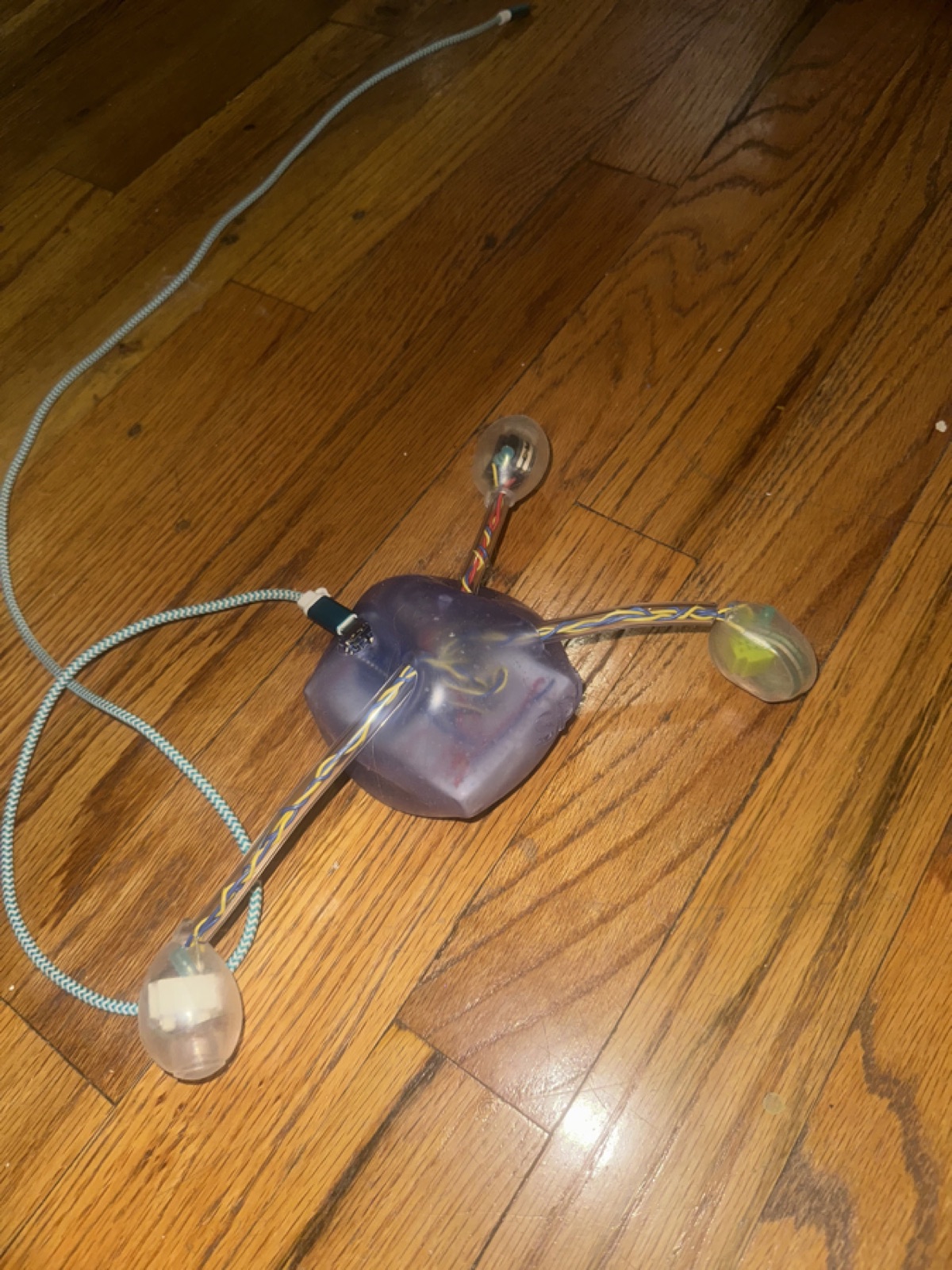
Peripheral circuits thread through the body. Squeeze harder, deeper, or in a new spot — the response changes with you.
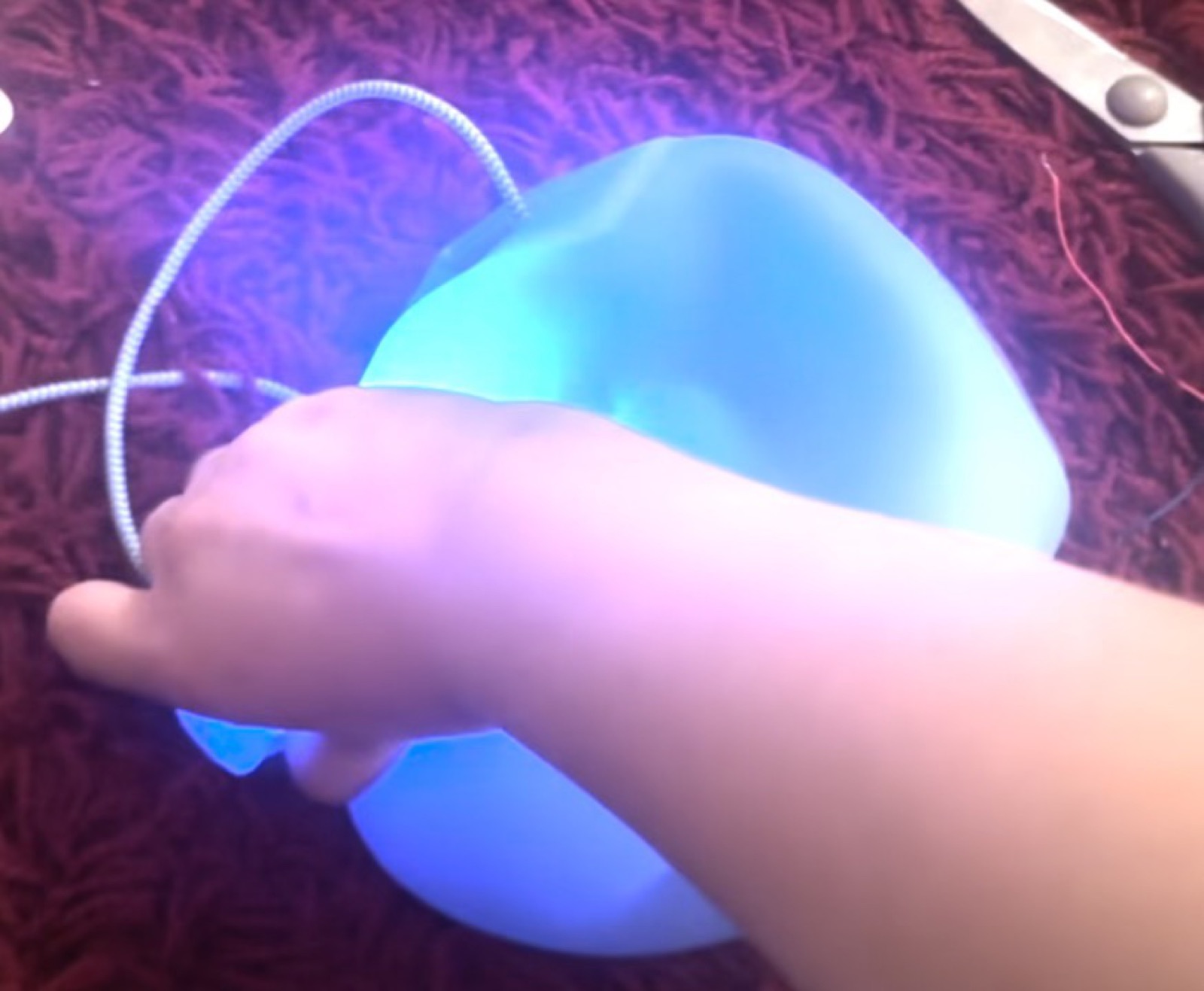
Diffused LEDs bloom through the translucent skin, turning the whole orb into a soft lamp that pulses with the sound.
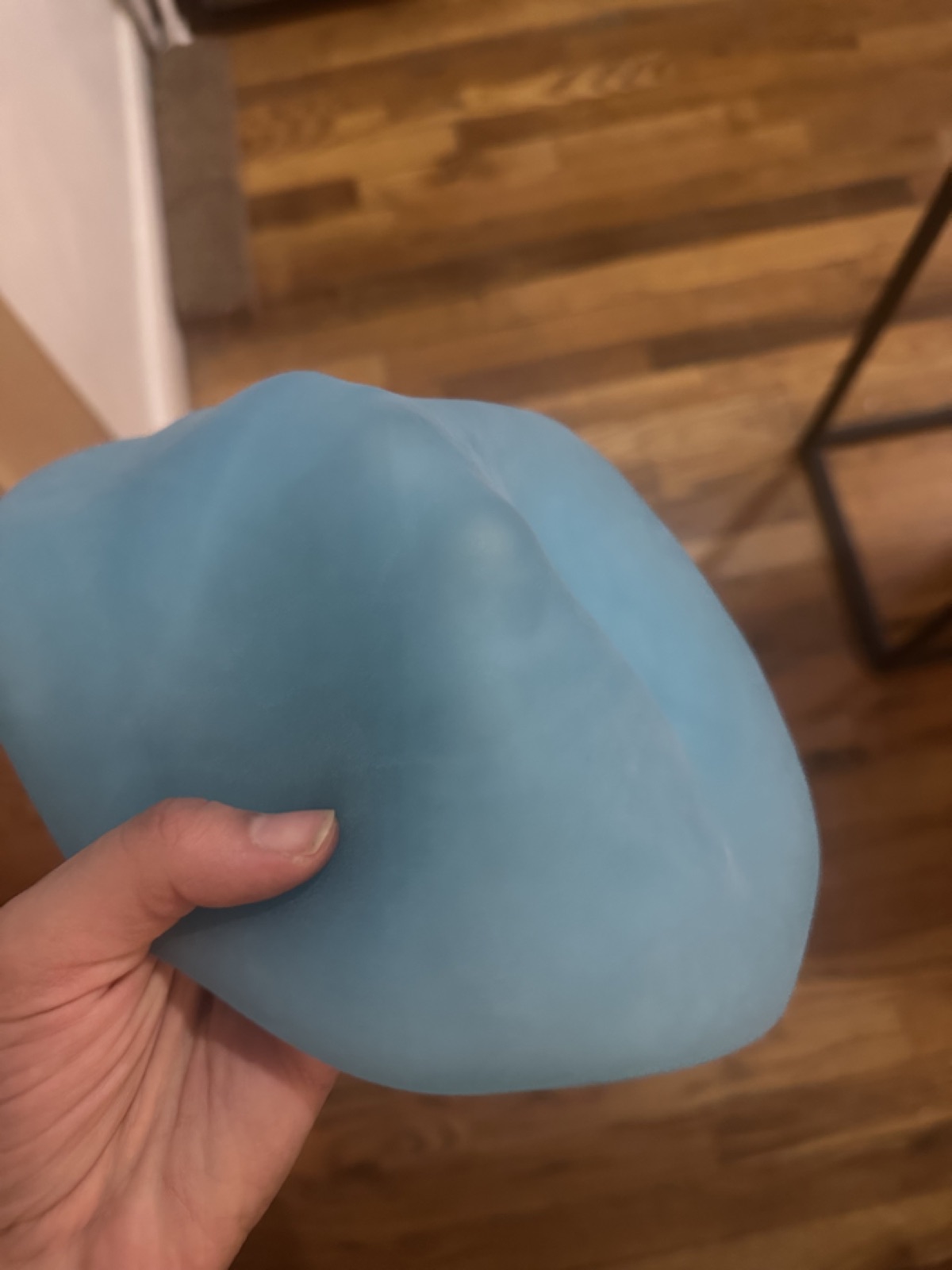
Built inside a Wubble — a big, forgiving rubber skin. Every component is rubber-enclosed, so it takes a real squeeze.
Interactive demo
Each pad is a pressure zone. Tap, hold, or use keys ASDFG.
Sound plays in your browser — no download required.
How we built it
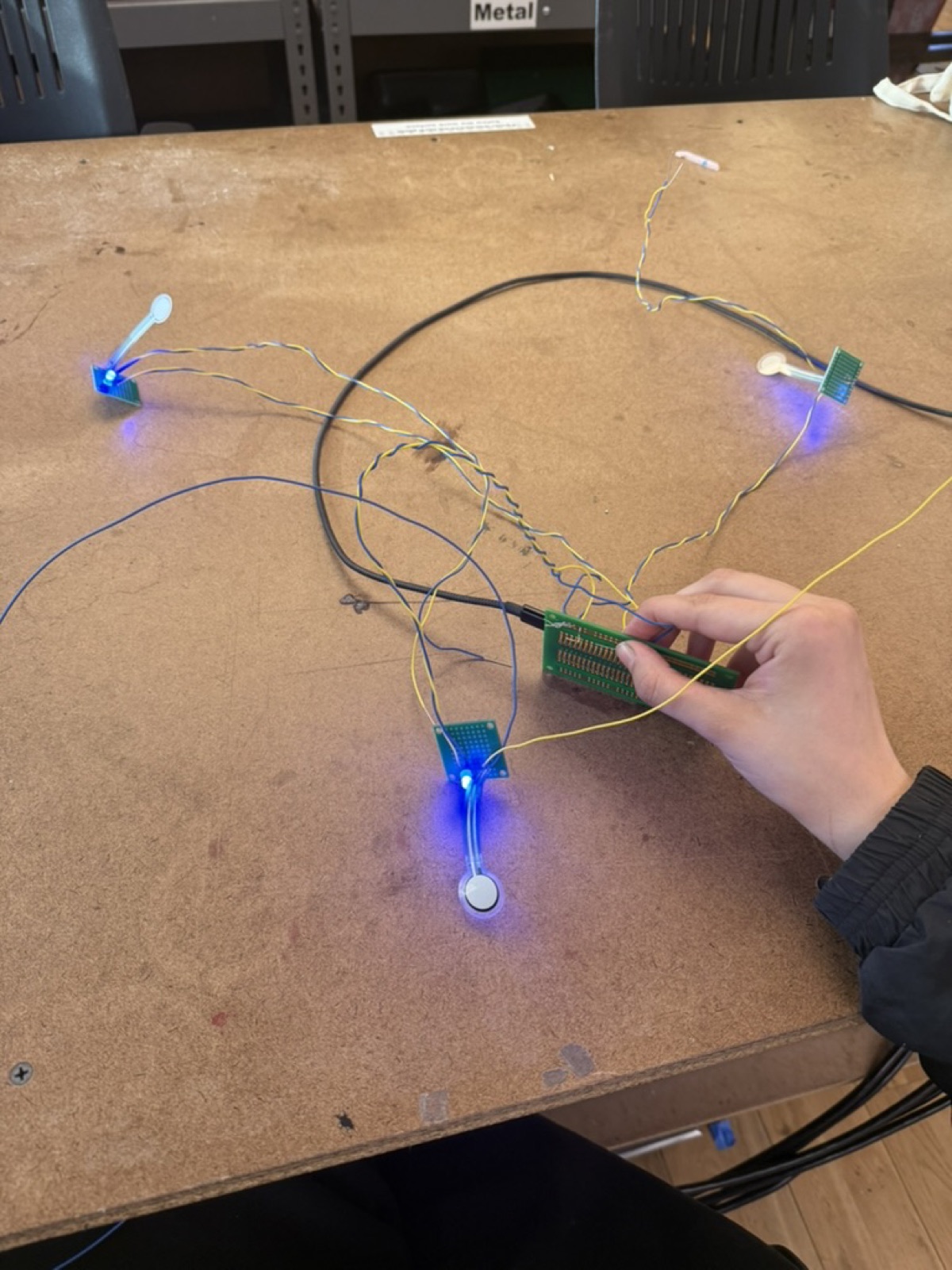
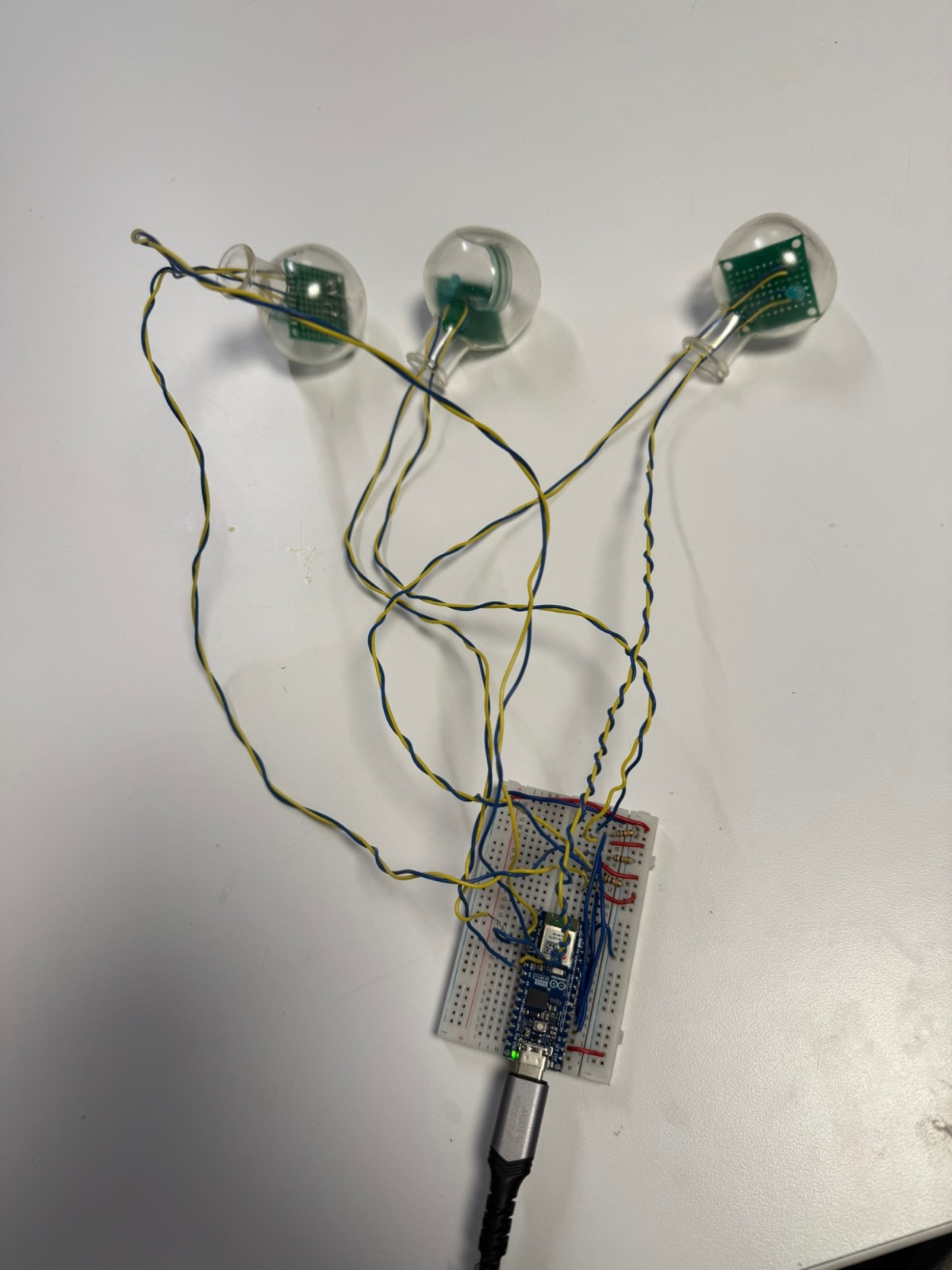
SquishyMusic was built across two rounds of funding from the NYU Prototyping Fund. Both generations pair an Arduino microcontroller with a rubber-enclosed system of small circuits extending through the body — pressure on any of them triggers LED lights and user-selected audio. What changed between rounds was the skin: the first prototype borrowed its rubber shell from a Wubble, a children's toy; the second replaced it with an enclosure I modeled myself in Fusion 360 and had Poly Jet printed in Agilus 30 white, a flexible photopolymer, fitted precisely to the sensor layout it houses.
A rubber-sealed core carrying the microcontroller and audio output.
Smaller enclosed circuits fan out on flexible leads to reach the whole surface.
Round one's Wubble skin diffused light and cushioned the squeeze. Round two's custom shell does the same job with a fit designed around the sensors themselves.
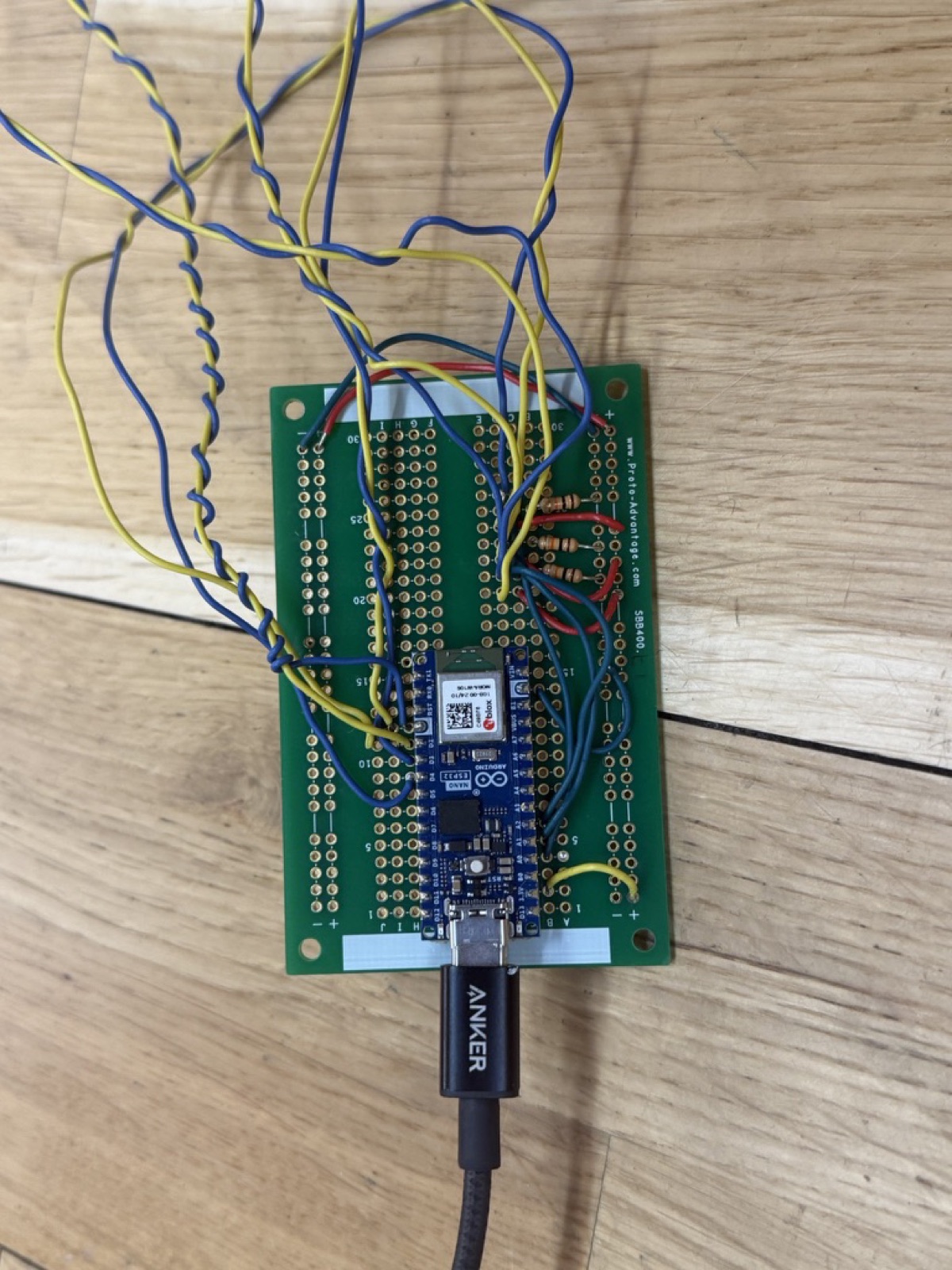
Round two, up close
The details
Join the list for prototype updates, build notes and early units.